Dry cleaning cleans clothes in a liquid solvent instead of water. Each garment is inspected and tagged, stains are treated first, then it is cleaned in a machine that circulates, filters and recovers the solvent, and finally it is steam pressed and finished by hand. Because fibres never soak in water, delicate fabrics keep their shape, size and colour.
Dry cleaning is not actually dry. Clothes are washed in a liquid, just not in water. The solvent dissolves body oils, grease, makeup and most everyday grime, and because it does not swell the fibres the way water does, silk, wool, rayon and structured tailoring come back the same size and shape they went in.
Here is what happens to a garment between the moment you hand it over and the moment it comes back on a hanger.
The dry cleaning process in 7 steps
1. Inspection and tagging
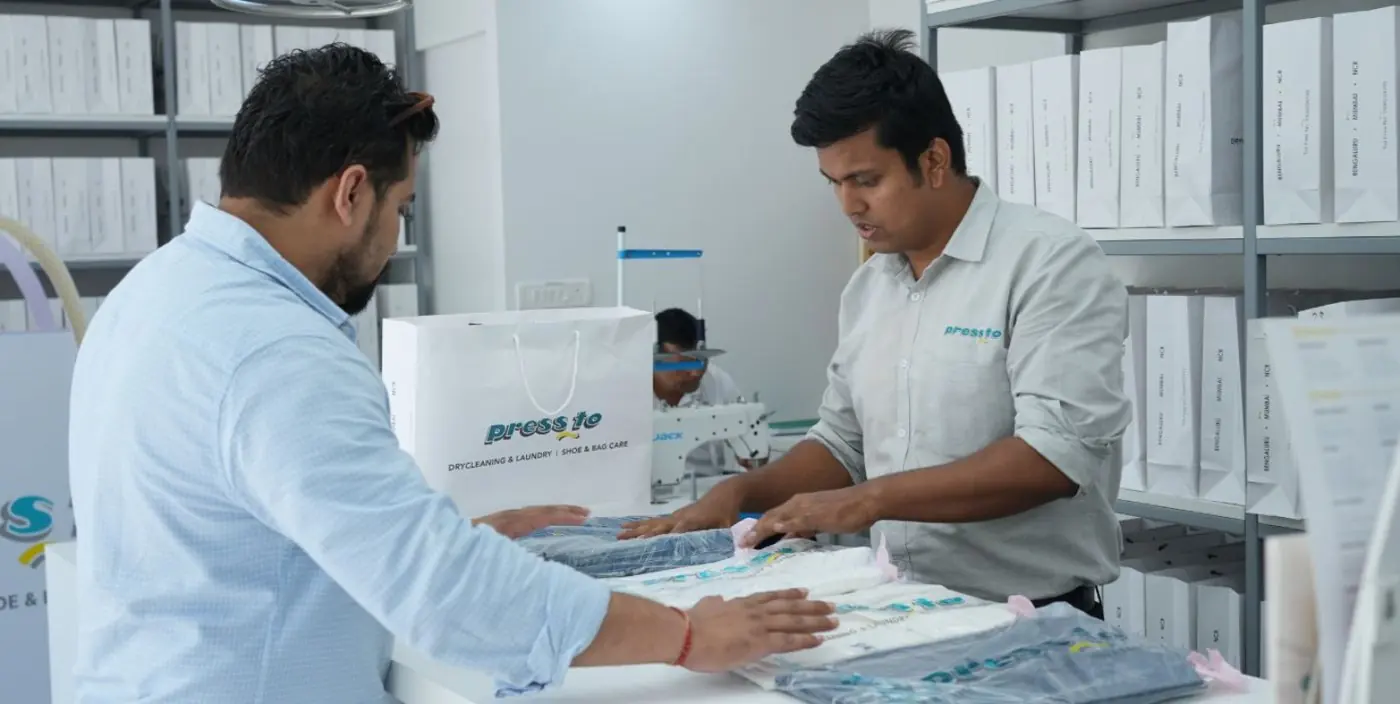
Every piece is checked under good light for stains, loose buttons, weak seams, embellishments and the care label. It is then tagged with a unique code so it can be tracked through every stage and matched back to your order.
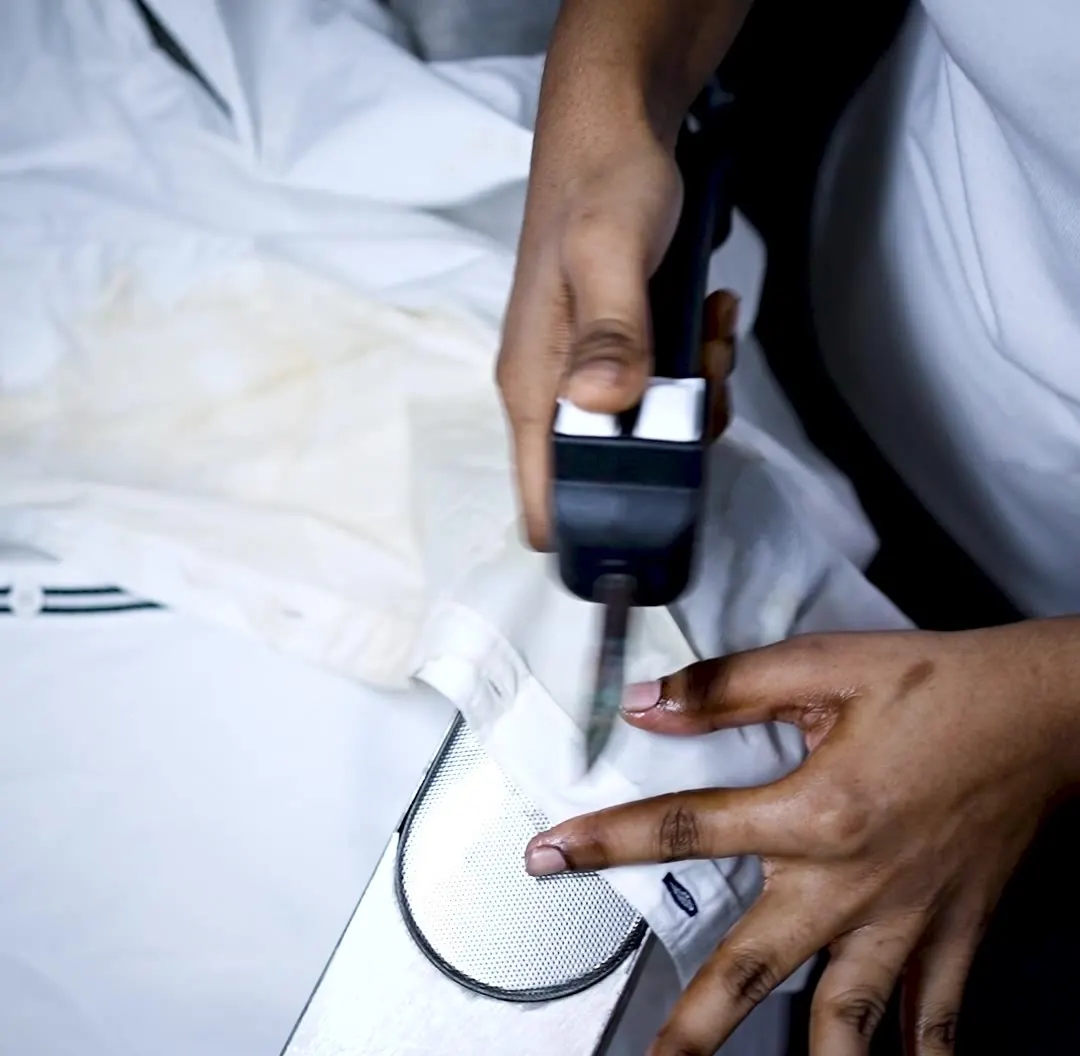
2. Stain treatment (pre-spotting)
Stains are treated before the main clean, because the clean alone will not remove everything. The method depends on what caused the stain. Oil and makeup respond to solvent; sweat, tea, coffee and food are water-based and need a different agent. Treating them early stops the heat of pressing from setting them later.
3. Sorting
Garments are grouped by colour, fabric weight and the care they need. A heavy wool coat and a georgette dupatta do not go into the same cycle.
4. The clean
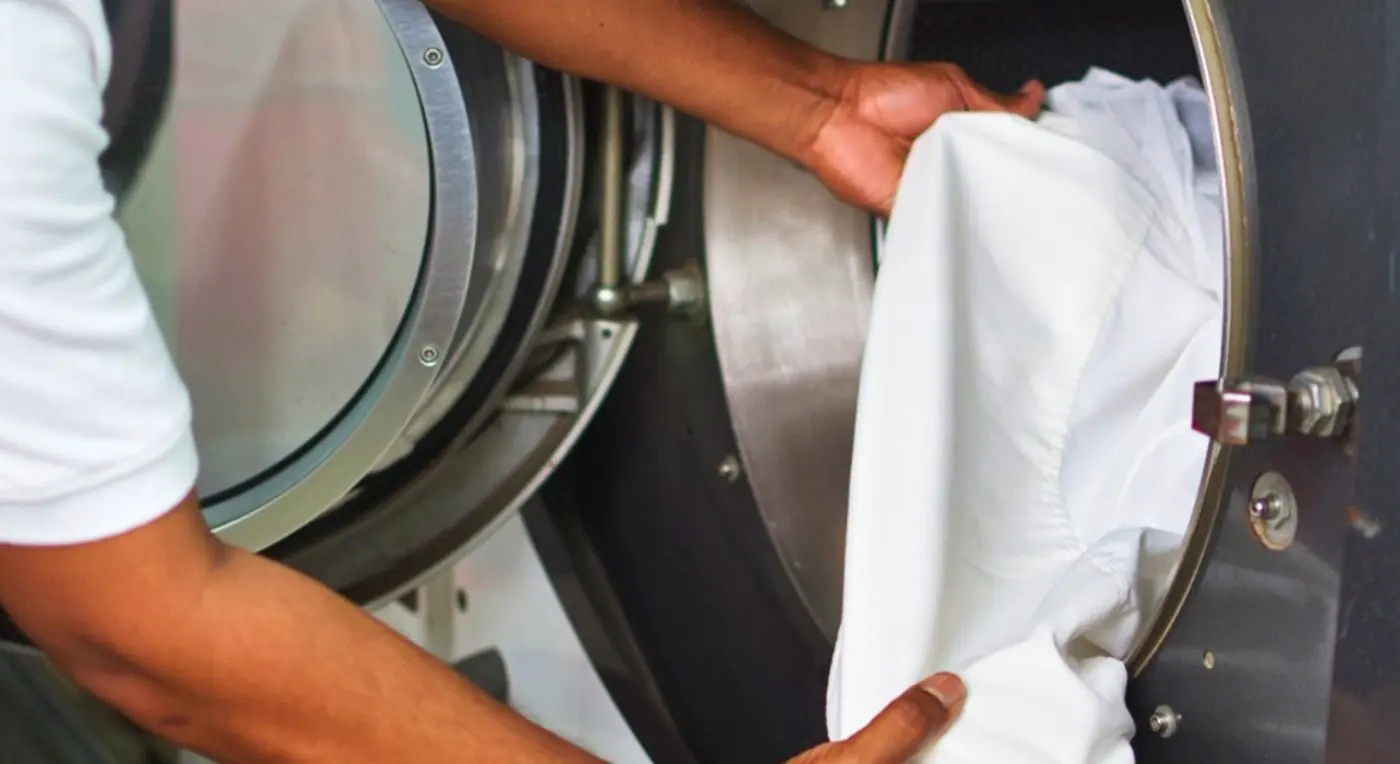
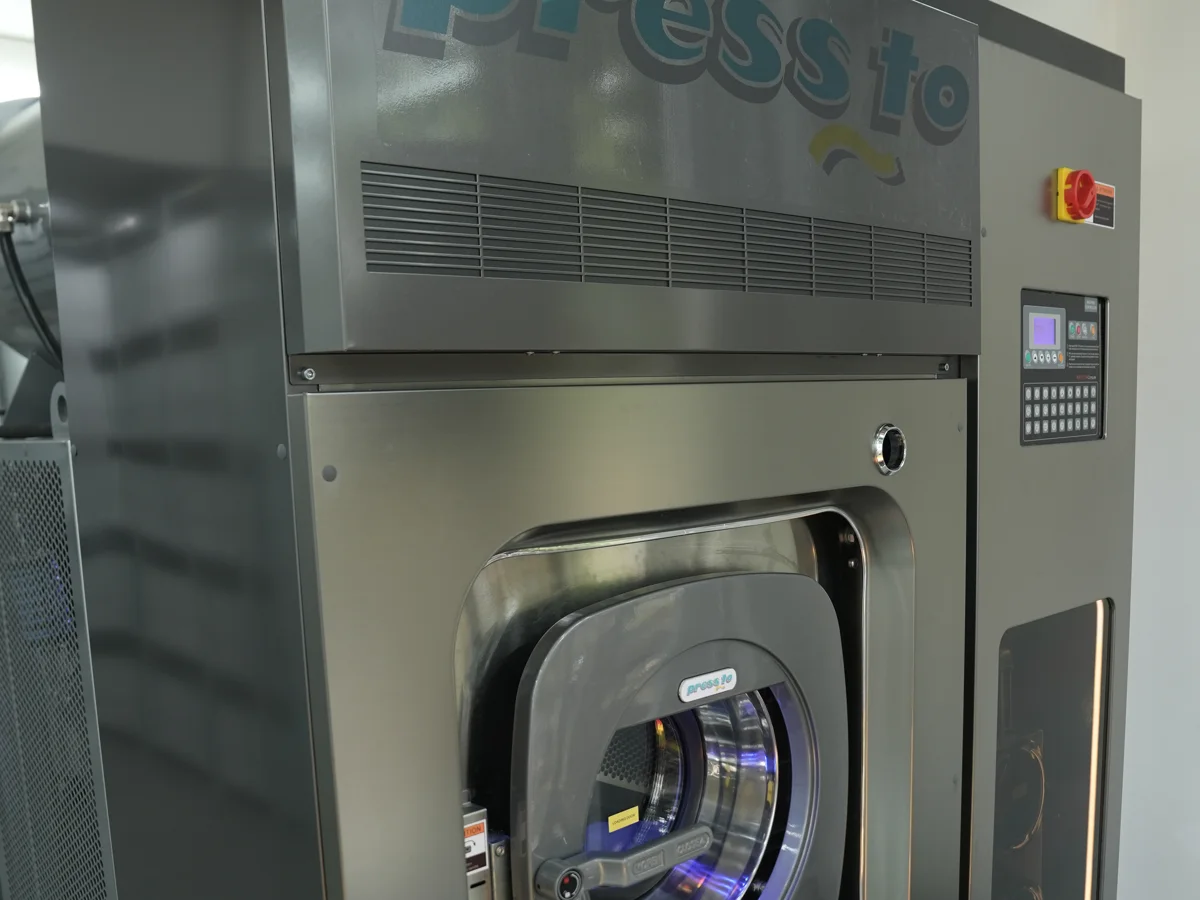
The machine looks like a large front-loading washer. Garments turn gently in the solvent, which is constantly filtered to pull out the dirt it has lifted. At the end of the cycle the solvent is spun out and recovered for reuse.
5. Drying and solvent recovery
Warm air dries the garments inside the same machine and the remaining solvent vapour is condensed and recovered, so clothes come out dry and odour-free. At Pressto, the solvent is also distilled after every cycle, so each load is cleaned in fresh, clear solvent rather than solvent that has already been used on other clothes.
6. Finishing
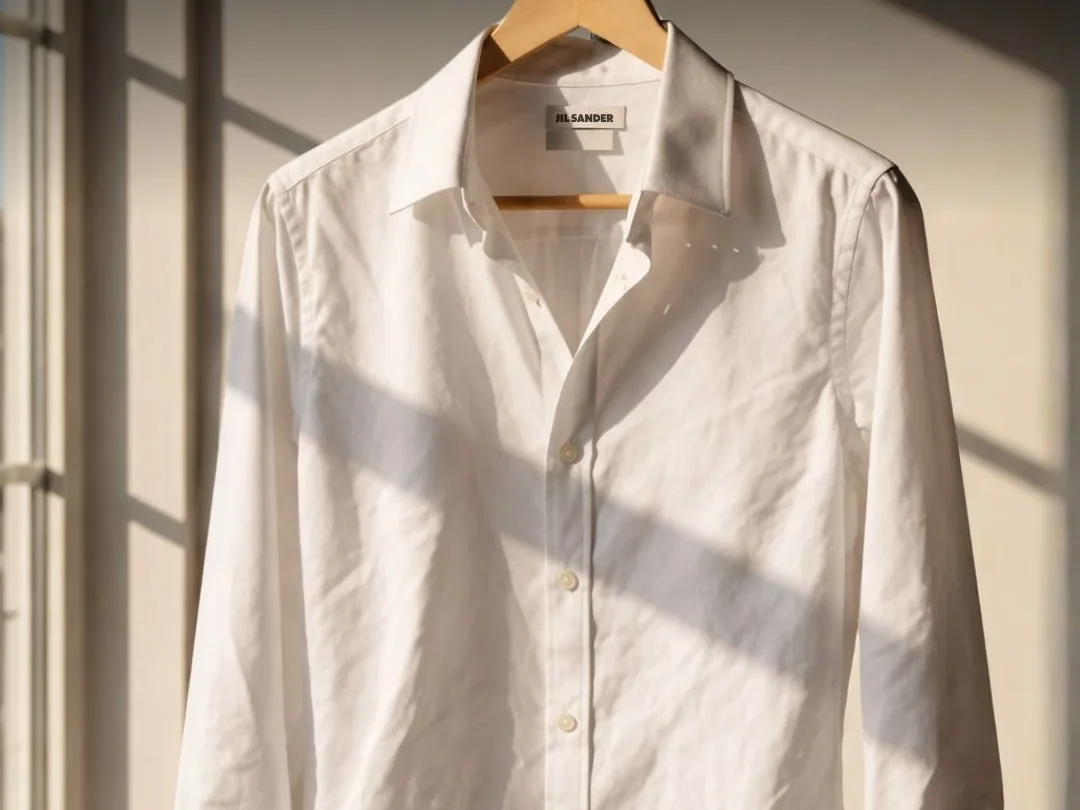
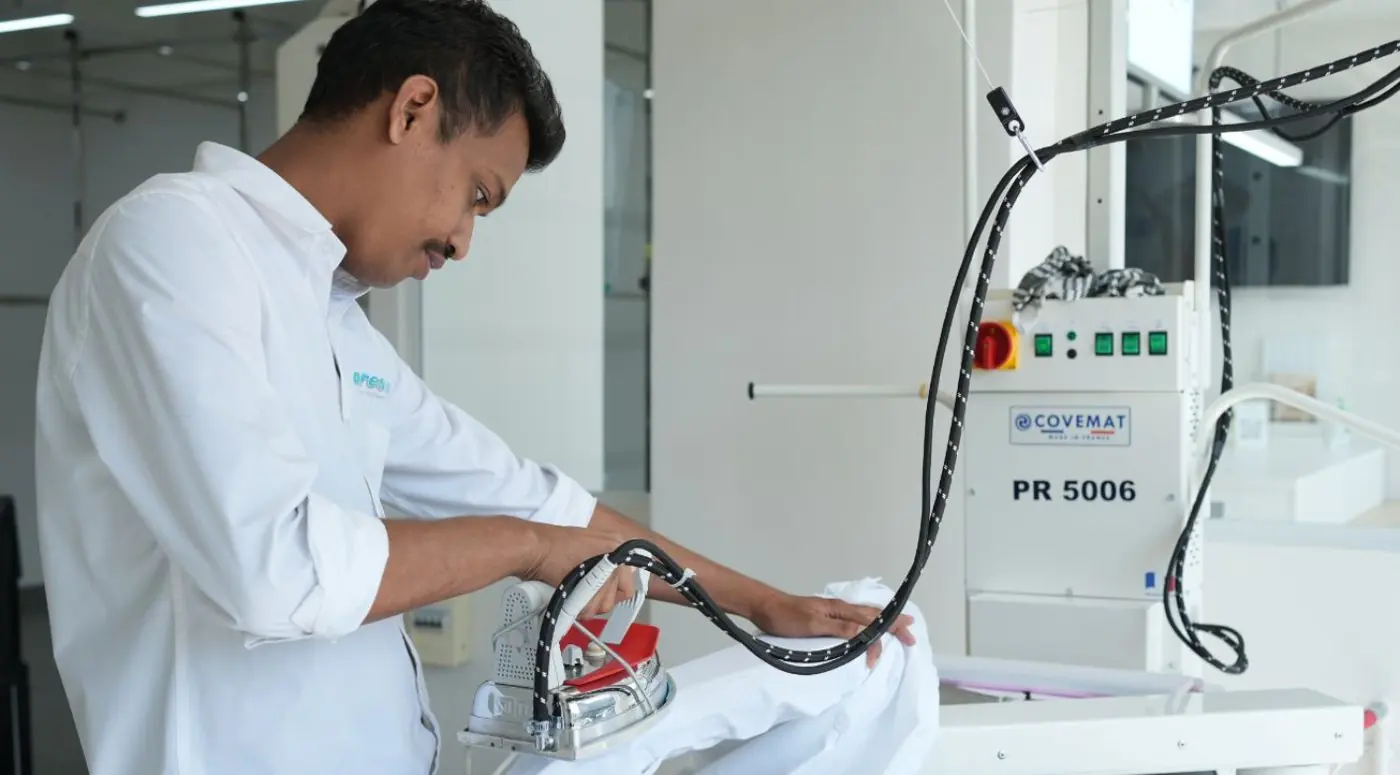
This is where a good cleaner shows. Garments are steam pressed on forms and tables made for their shape: shirts, trousers, jackets, sarees. Pleats are set, collars shaped and embroidery pressed from the reverse so it is never flattened.
7. Final check and packing
A last inspection catches anything that needs another pass. Buttons are checked, and each piece is hung or folded the way it should be stored, then covered for its trip home.
Which clothes should be dry cleaned?
- Silk sarees, kurtas, shirts and ties, which can lose sheen, shrink or water-mark in a wash.
- Wool suits, blazers, coats and shawls, which felt and shrink with water and agitation.
- Structured tailoring. Jackets and sherwanis have interlinings that can bubble or warp when soaked.
- Embroidered, zari and embellished pieces such as lehengas, which need a method chosen for the work on them.
- Rayon, viscose, velvet and satin, which can shrink, crush or lose their finish in water.
- Anything labelled Dry clean only, or marked with the letter P or F in a circle.
Everyday cottons, linen, denim and most activewear do better in a professional wash. See dry cleaning vs laundry for how to choose.
Is dry cleaning safe for my clothes?
Done properly, it is the gentlest way to clean delicate and structured garments. What matters most is the inspection before the clean, the quality and freshness of the solvent, and the skill of the finishing. Strong smells on returned clothes are usually a sign that solvent has not been fully recovered, which is why distillation and proper drying matter.
What happens when you hand your clothes to Pressto
- Free pickup and drop from your home or office, or walk into any of our 80+ stores.
- Inspection before cleaning, with anything delicate or at risk noted and shared with you.
- Price confirmed before work starts, so you always know first.
- Solvent distilled after every cycle, soft water and pH-balanced products for washing.
- Hand finished and returned in biodegradable covers.
Frequently asked questions
Is dry cleaning really dry?
No. Clothes are cleaned in a liquid solvent instead of water. It is called dry because water is not used, so fibres do not swell, shrink or lose their shape.
How long does dry cleaning take?
It depends on the garment and the care it needs. At Pressto, the timeline is shared after inspection, and express options are available for selected services.
Does dry cleaning remove all stains?
Most, but not all. Old, heat-set or dye stains may not come out completely. A good cleaner tells you this before cleaning, not after.
Why do some dry cleaned clothes smell?
A chemical smell usually means solvent has not been fully recovered during drying. Properly dried garments should come back smelling of nothing at all.
How often should I dry clean a suit?
Every four to six wears, or sooner if it is stained or has been worn in heat. Over-cleaning wears fabric faster; brush and air the suit between wears.

Our garment, shoe and bag specialists share what they have learned caring for wardrobes across India since 2008.