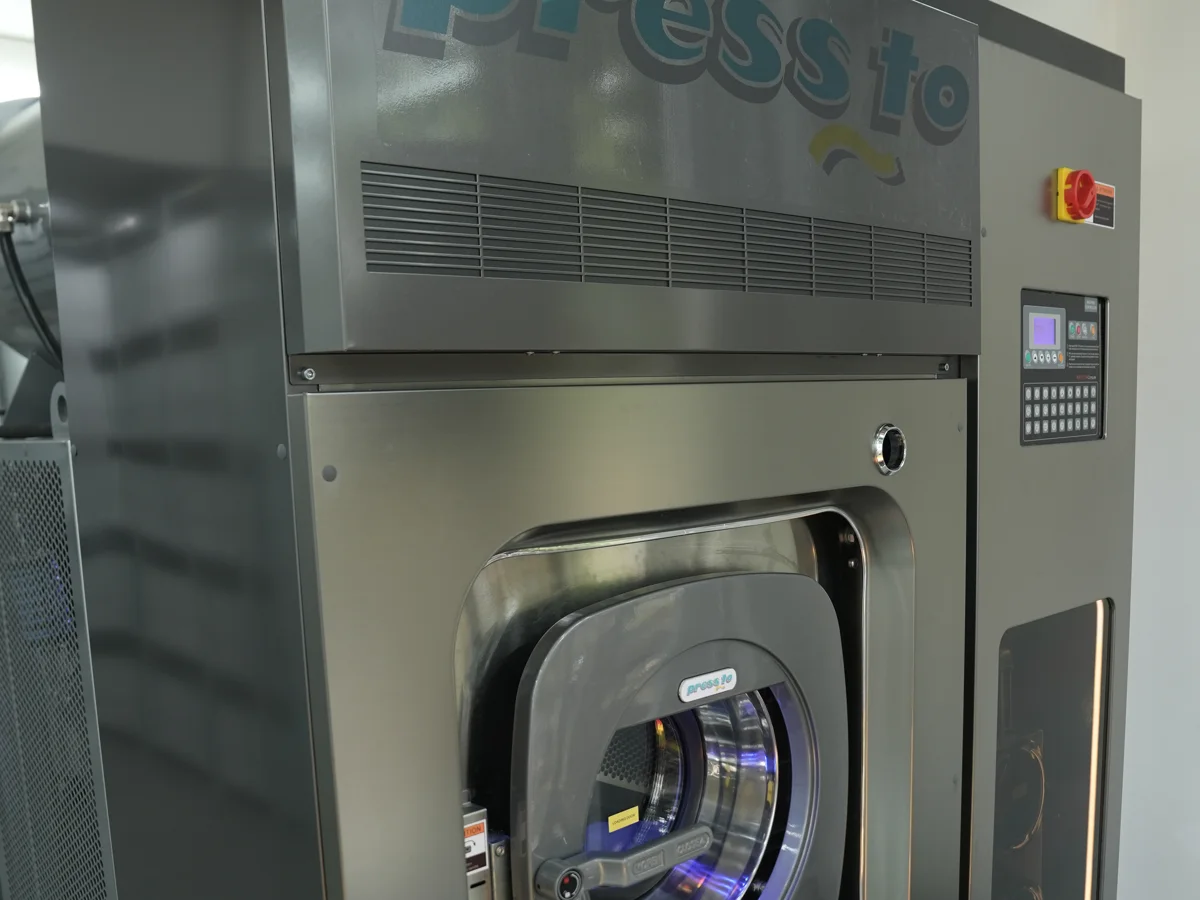
Laundry cleans with water and detergent; dry cleaning cleans with a solvent instead of water. Use laundry for cotton, linen, denim, bedsheets and most everyday wear. Use dry cleaning for silk, wool, suits, embroidered and embellished pieces, and anything labelled Dry clean only.
Both methods get clothes clean. The difference is what does the cleaning, and what that does to the fabric. Water is excellent at removing sweat, food and water-based stains, but it makes many natural fibres swell, which is why wool shrinks and silk loses its sheen. Solvent dissolves oils and grease without soaking into the fibre, which is why it suits delicate and structured garments.
Dry cleaning vs laundry at a glance
| Laundry | Dry cleaning | |
|---|---|---|
| Cleans with | Water and detergent | A liquid solvent, no water |
| Best at removing | Sweat, food, mud and water-based stains | Oil, grease, makeup and body oils |
| Best for | Cotton, linen, denim, bedsheets, towels, activewear | Silk, wool, suits, sarees, lehengas, velvet, rayon |
| Risk if used on the wrong fabric | Shrinking, felting, colour bleeding, lost shape | Unnecessary for sturdy cottons; not ideal for heavy sweat |
| Finish | Washed, dried, then ironed or folded | Steam pressed and shaped on forms |
Clothes that should go to laundry
- Cotton and linen shirts, kurtas and trousers
- Jeans and denim jackets
- Bedsheets, pillow covers and towels
- T-shirts, gym and activewear
- School uniforms and everyday office wear
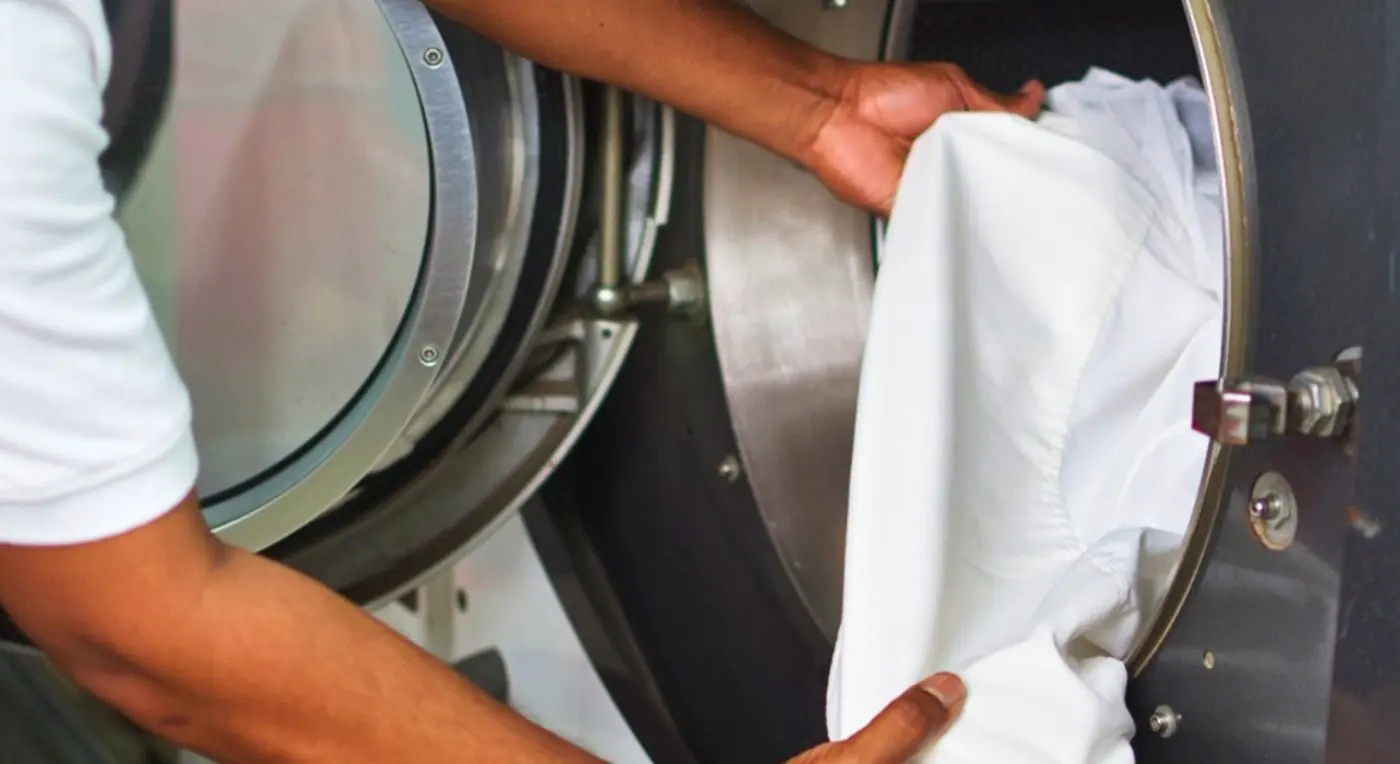
A professional wash also controls what you cannot at home. At Pressto we use soft water and pH-balanced products, which keep whites bright and colours from fading in hard city water.
Clothes that should be dry cleaned
- Silk and silk-blend sarees, kurtas, shirts and ties
- Wool suits, blazers, coats and shawls
- Sherwanis, bandhgalas and structured jackets
- Lehengas and anything with zari, sequins or heavy embroidery
- Velvet, satin, rayon and viscose
- Anything labelled Dry clean only
How to read the care label
| Symbol | What it means |
|---|---|
| A tub of water | Can be washed. Dots or a number show the maximum temperature. |
| A tub with a hand | Hand wash only, gently and in cool water. |
| A tub with a cross | Do not wash in water. |
| A circle | Can be dry cleaned. A letter inside (P or F) tells the cleaner which solvent to use. |
| A circle with a cross | Do not dry clean. |
| A circle with W | Professional wet cleaning is suitable. |
If a garment says Dry clean rather than Dry clean only, it may survive a careful hand wash, but dry cleaning is still the safer choice for anything you want to keep looking new.
Not sure? Let a specialist decide
Mixed fabrics, linings and embellishments can make labels misleading. When you send clothes to Pressto, every piece is inspected first and our team chooses the right method for it, whether that is a wash, a dry clean, or steam pressing only. Read how dry cleaning works to see what happens next.
Frequently asked questions
Can I wash a Dry clean only garment at home?
It is a risk. Silk, wool and structured pieces can shrink, lose shape or water-mark. If the garment matters to you, have it professionally cleaned.
Is dry cleaning better than washing?
Neither is better overall. Dry cleaning is gentler on delicate and structured fabrics; laundry is better for cottons, linens and heavily sweated everyday wear.
Can cotton be dry cleaned?
Yes, but it is rarely needed. Cotton washes well, and water is better at removing sweat. Dry cleaning makes sense for cotton with embroidery, linings or prints that might bleed.
How do I clean a silk saree?
Dry clean it. Water can leave rings on silk and dull zari borders. Air it after wearing and store it folded in muslin.
Does Pressto do both laundry and dry cleaning?
Yes. We offer laundry, dry cleaning and steam ironing, with free pickup and drop in every city we serve.

Our garment, shoe and bag specialists share what they have learned caring for wardrobes across India since 2008.