A dry cleaning solvent is the liquid used in place of water to clean clothes. It dissolves oils and grease without making fibres swell, so delicate fabrics keep their size and shape. The common types are perchloroethylene (perc), hydrocarbon, silicone-based solvents and liquid CO2. What matters as much as the type is how cleanly the solvent is kept.
Water is a brilliant cleaner, but not for everything. It makes natural fibres like wool and silk swell, which leads to shrinking, felting and lost shape. A dry cleaning solvent does the same job without water: it dissolves body oils, grease and makeup and carries the dirt away, then is recovered from the clothes so they come out dry.
The main types of dry cleaning solvent
| Solvent | What it is | Good to know |
|---|---|---|
| Perchloroethylene (perc) | The traditional solvent, used for decades worldwide | Very strong cleaner. Increasingly restricted in many countries for health and environmental reasons. |
| Hydrocarbon | A refined, petroleum-based solvent | Gentler on delicate fabrics, trims and embellishments. Needs modern machines. |
| Silicone-based | A siloxane solvent | Very gentle and low odour. Mostly used by specialist cleaners. |
| Liquid CO2 | Pressurised carbon dioxide | Non-toxic, but needs costly equipment, so it is rare. |
| Professional wet cleaning | Water with special detergents and computer-controlled machines | Not a solvent, but an alternative for some garments labelled with a W. |
Why the solvent has to be kept clean
In every cycle the solvent picks up the oils and dirt it removes. If it is only filtered, some of that grime stays in it, and the next load is cleaned in slightly dirty liquid. Over time that shows up as greying whites, dull colours and a lingering smell.
Distillation solves this. The used solvent is heated, turned to vapour and condensed back into a clear liquid, leaving the dirt behind. At Pressto, our solvent is distilled after every cycle, so your clothes are always cleaned in fresh solvent.
Is dry cleaning solvent safe?
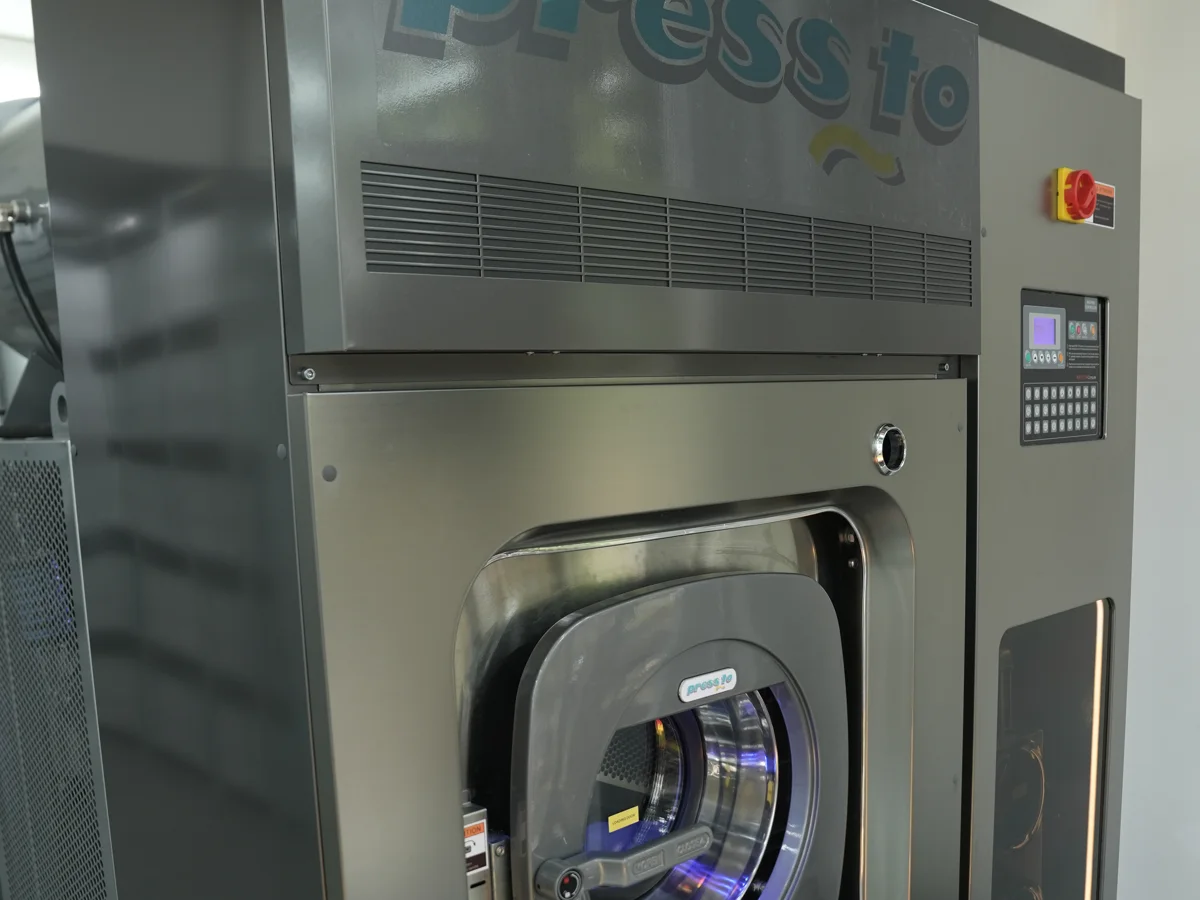
In a well-run store with modern closed-loop machines, the solvent is recovered almost completely during drying, so your clothes come back clean, dry and odour-free. A strong chemical smell on returned clothes is a sign that drying and recovery were rushed. If you notice it, air the garment and mention it to your cleaner.
What to look for in a dry cleaner
- Modern machinery with closed-loop solvent recovery.
- Distillation of solvent, ideally after every cycle.
- Inspection before cleaning, with stain treatment matched to the fabric.
- Skilled finishing: pressing on forms, not just a flat iron.
- Honesty up front about stains that may not come out.
Frequently asked questions
Which solvent is used in dry cleaning?
Perc has been the most common worldwide. Many modern cleaners use hydrocarbon or other gentler solvents. Ask your cleaner which they use and how often it is distilled.
Does dry cleaning leave chemicals on clothes?
Properly dried garments retain virtually no solvent. A strong smell suggests the drying or recovery stage was cut short.
Is dry cleaning safe for babies and children’s clothes?
Most children’s clothes are cotton and are better washed. For a dry cleaned item, remove the cover and air it before use.
Why does Pressto distil solvent after every cycle?
So every load is cleaned in fresh, clear solvent. It keeps whites bright and colours true and stops dirt from one load reaching the next.

Our garment, shoe and bag specialists share what they have learned caring for wardrobes across India since 2008.